
- 8 Views
- 3 Min Read
- (0) Comment
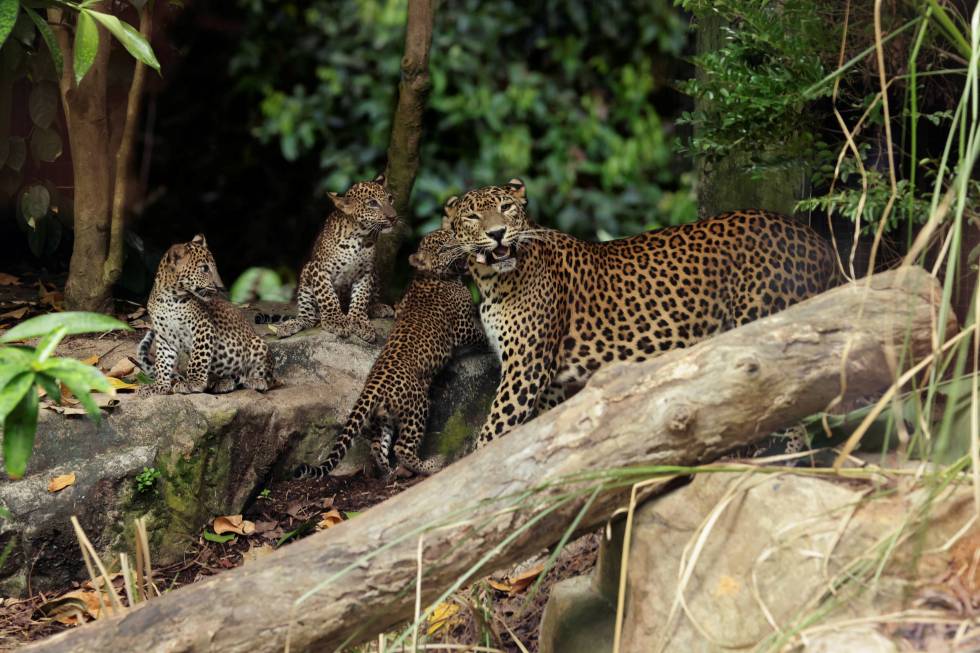
On 1 January 2026, something quietly remarkable happened at Singapore Zoo — three Sri Lankan leopard cubs were born, marking the first time this critically rare subspecies has been successfully bred at the facility. Now over three months old, the triplets — two males and one female — have made their public debut at the Wild Africa exhibit, and their arrival has drawn attention from conservationists and wildlife enthusiasts around the world.
For those of us connected to Sri Lanka’s wild landscapes, this news carries a particular weight. The Sri Lankan leopard (Panthera pardus kotiya) is not just any big cat. It is the island’s apex predator, an animal that has shaped the ecology of Sri Lanka’s forests and scrublands for millennia — and one that is now fighting for survival.
A Species Under Pressure
The Sri Lankan leopard is listed as Vulnerable on the IUCN Red List. Fewer than 800 individuals are estimated to remain in the wild, facing ongoing threats from habitat loss, declining prey populations, and illegal wildlife trade. In the global zoo community, the situation is equally stark — only around 80 Sri Lankan leopards are currently held in zoos worldwide, making every successful birth a significant conservation event.
The Singapore Zoo cubs are the offspring of mother Yala — named, fittingly, after Sri Lanka’s most celebrated national park — and father Asanka. Their pairing was coordinated through the European Association of Zoos and Aquaria (EAZA) Ex-situ Programme, an internationally managed breeding initiative designed to maintain genetically healthy populations of threatened species across partner institutions.
Three Years in the Making
Bringing this litter into the world was not a simple undertaking. Yala arrived from Banham Zoo in the United Kingdom in 2024, while Asanka was transferred from the National Zoo and Aquarium in Australia in 2025. Their introduction was carefully staged over months — beginning with visual contact through a barrier, progressing to shared spaces at different times to allow scent familiarisation, before the pair were finally brought together in late September 2025. Pregnancy was confirmed in October, with weekly ultrasound monitoring carried out through to the birth.
As Anand Kumar, Curator of Animal Care at Mandai Wildlife Group, noted, bringing together a compatible pair required nearly three years and close collaboration across continents. The result — three healthy, thriving cubs — represents the collective effort of zoos across three countries.
Growing Up Wild (in Managed Care)
At three months old and weighing around 5kg each, the cubs are at a fascinating stage of development. They have begun transitioning to a partial meat diet, developing the chewing skills and scent recognition that are foundational to a leopard’s natural feeding behaviour. They are frequently seen playfighting — scrappy, energetic bouts that help build the social and survival instincts they will need as adults. The two males tend toward a more relaxed temperament, while the female has already established herself as the feistier of the three.
Their first veterinary check in February confirmed good health across the board. They were vaccinated against common feline diseases, microchipped, and given a clean bill of health — a routine but essential milestone for any animal in a managed conservation programme.
Why This Matters for Sri Lanka
Managed breeding programmes like this one are not a replacement for in-situ conservation — protecting wild habitats and wild populations will always be the priority. But they serve a critical complementary role, maintaining a genetically diverse insurance population and keeping the species visible and relevant to global audiences who might otherwise never encounter it.
Every person who stands in front of that exhibit in Singapore and watches a Sri Lankan leopard cub explore its environment is, in a small but real way, being connected to this island and the wild places that sustain it. That connection is the foundation of conservation support.
With Singapore Zoo now home to six Sri Lankan leopards — and the cubs on daily public display with their mother until mid-May — the species is, for the moment, in the spotlight. For those of us who have watched a leopard move through the dry zone forests of Sri Lanka at dusk, that spotlight is long overdue.
Source: Mandai Wildlife Group press release, 16 April 2026
Leave a comment: